
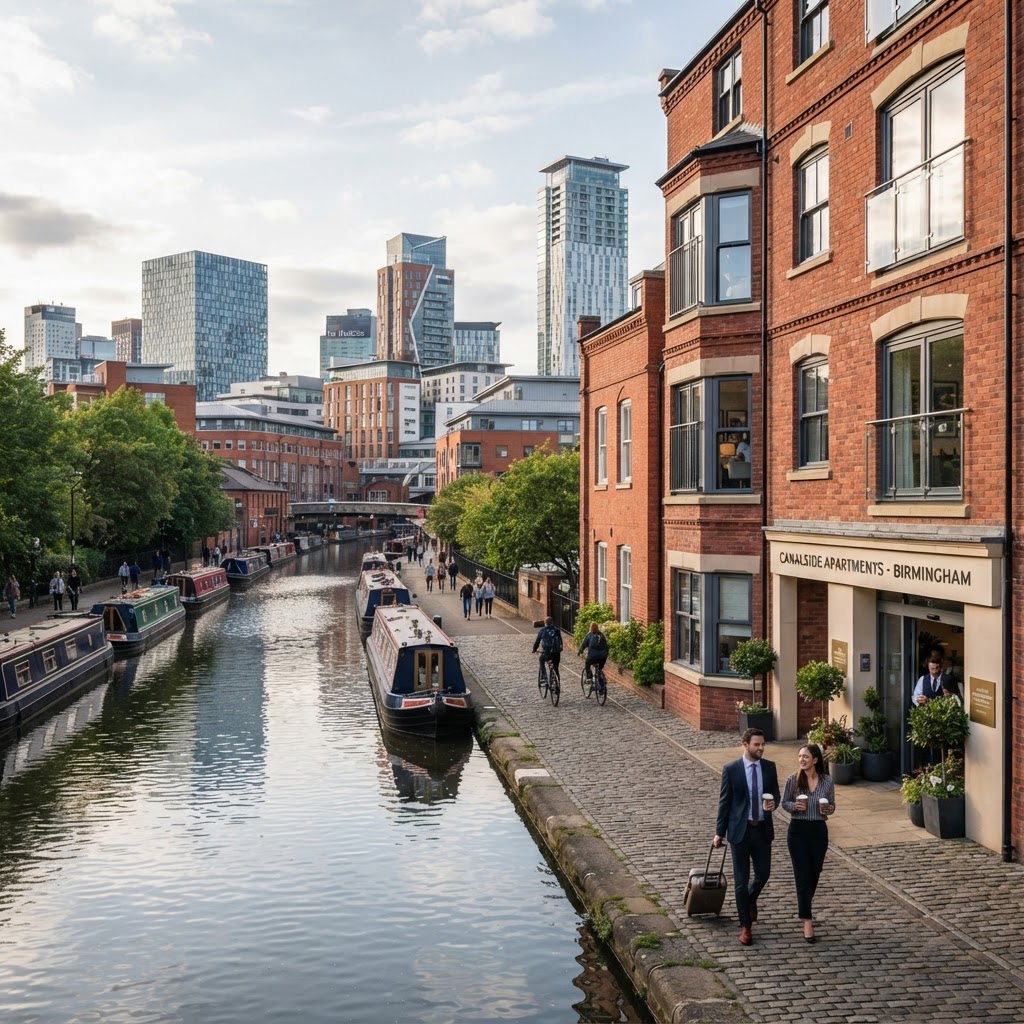
Birmingham is one of the most talked-about short-let markets outside London, and the interest is not hard to explain. But plenty of operators have bought in the wrong postcode, paid too much for a flat with poor transport links, and ended up with occupancy in the 40s. This guide cuts through the broad enthusiasm and looks at what actually drives performance across the city.
Why Birmingham keeps attracting short-let investors
The headline case for Birmingham is straightforward. It is the UK's second-largest city by population, sits at the centre of the national rail network, and has a business visitor economy that does not switch off in the way that purely leisure-driven cities can. The NEC alone generates consistent midweek corporate demand throughout the year, which is the kind of demand that keeps average daily rates stable rather than spiking only at weekends.
The 2022 Commonwealth Games brought a wave of coverage, but more usefully it accelerated infrastructure investment that had been building for years. The tram network expansion, the ongoing Digbeth regeneration, and the growth of Brindleyplace and Broad Street as genuine hospitality districts have all expanded the map of where guests actually want to stay. Five years ago most short-let operators were concentrated in the immediate city centre. Now there are properties performing well in Jewellery Quarter, Digbeth, and even parts of Edgbaston that would have looked speculative as short-let locations in 2019.
Which areas actually perform well
The Jewellery Quarter is probably the strongest postcode for short lets in Birmingham right now. It has genuine neighbourhood character, walkability to the city centre, and a mix of corporate and leisure guests that keeps bookings spread across the week. Two-bedroom apartments in converted heritage buildings regularly achieve £90 to £120 per night at healthy occupancy. The area also attracts longer stays of four to seven nights from contractors and consultants working nearby, which reduces turnover costs significantly.
Digbeth is higher risk but increasingly interesting. The HS2 Curzon Street terminal will eventually place it at the front of the city's transport network, and the creative industries cluster there gives it an identity that appeals to a younger leisure demographic. At the moment occupancy can be inconsistent, and the area still feels in transition. Operators who go in there now are taking a position on where it will be in three to five years rather than buying proven income today.
The city centre itself, particularly around Broad Street and Brindleyplace, produces strong weekend numbers driven by stag and hen parties, concerts at the Utilita Arena, and football at Villa Park or St Andrew's. The problem is that midweek occupancy can drop sharply if a property is not positioned carefully, and the competition from purpose-built aparthotels in the centre has increased meaningfully since 2021. If your investment thesis depends entirely on weekend leisure demand, Birmingham city centre is a more crowded trade than it was.
Avoid the areas immediately around Broad Street that have heavy night-time economy activity unless you are prepared for the management complexity that comes with it. Guest profiles in those locations require more active vetting, and the wear and tear on a property is higher than elsewhere in the city.
What the income numbers look like
A well-positioned one-bedroom apartment in the Jewellery Quarter, priced with a sensible dynamic pricing strategy, will typically generate between £18,000 and £24,000 gross per year. A two-bedroom in the same area can reach £28,000 to £36,000 at strong occupancy. These are gross figures before management fees, cleaning, consumables, maintenance, and platform charges, which collectively tend to run at 35 to 45 percent of gross revenue for most operators.
Net yields on purchases made at today's Birmingham prices are realistic in the 5 to 8 percent range for properties in the right locations, which compares favourably to traditional long-let yields in the city. That said, the purchase price matters enormously. A two-bedroom flat bought for £280,000 in a secondary location that achieves only £22,000 gross looks very different to one bought for £220,000 in a stronger postcode achieving £32,000. The gap between good and average locations in Birmingham is wider than most investors expect before they run the actual numbers.
One piece of context that does not appear in most general guides: Birmingham's corporate demand is particularly concentrated around specific event clusters at the NEC, ICC, and the Arena. Operators who understand the annual events calendar and adjust minimum stays and pricing around those windows -- Crufts, the BBC Good Food Show, major trade exhibitions -- can add meaningfully to annual revenue compared with operators who rely on a platform's automated pricing alone.
What kind of property works best
Two-bedroom apartments outperform one-beds in Birmingham on a per-night basis and tend to attract slightly longer average stays, which is operationally preferable. Three-bedroom houses in areas like Harborne or Moseley can perform well for family leisure stays and contractor groups, but they require more active management and the addressable guest pool is narrower.
Parking is a more significant factor in Birmingham than in cities with better public transport penetration. Properties with allocated parking, particularly those targeting NEC visitors who tend to drive, achieve noticeably higher occupancy during event periods. If a property has no parking and no easy access to the tram network, that limits the addressable demand pool in ways that will show up in your occupancy data within the first three months.
Serviced accommodation-style fit-outs, meaning hotel-quality beds, fast broadband clearly advertised in the listing, a proper working desk, and a functional kitchen, consistently outperform basic furnished flats in Birmingham's corporate segment. The interiors investment is not about luxury for its own sake. It is about matching what a business traveller would choose over a budget hotel room at a similar price point.
The risks you need to price in
Birmingham City Council has been actively monitoring the short-let sector, and while there is no citywide Article 4 direction specifically targeting short lets at the time of writing, the national short-let registration scheme is moving forward. Any operator or investor buying in Birmingham now should assume that registration requirements and potential planning restrictions are a feature of the operating environment within the next two to three years. Buying in a location where short-let use is already well established and accepted locally reduces that regulatory risk compared with buying in residential streets where there is no existing short-let presence.
The supply picture in central Birmingham has changed. The number of active listings has grown substantially since 2020, and some of the easiest occupancy gains from simply being one of a handful of options in an area are no longer available in the same way. Strong operators are still doing well, but the margin between an optimised operation and a passive one has widened. If you are planning to self-manage from a distance without a reliable local team, the numbers are harder to make work than they were three years ago.
Always seek professional advice on the tax and planning position for any specific property before you proceed with a purchase. The rules around business rates, council tax, and planning use for short lets are evolving, and the position for your specific property may differ from the general guidance available online.
Is Birmingham worth buying into right now
For the right property in the right location, yes. Birmingham has structural demand drivers that are not going away: the NEC, the business district, the ongoing regeneration, and a catchment of over 4 million people within an hour's drive. It is not a market where you can buy anything, list it on Airbnb, and expect strong returns. But operators who are selective about postcode, sensible about purchase price, and prepared to run the property professionally are still generating net yields that beat long-let alternatives by a meaningful margin.
The Jewellery Quarter and parts of Digbeth represent the better risk-adjusted opportunities at the moment. City centre properties around the Broad Street corridor require a more experienced operator to manage the guest profile and maintain the income consistency that justifies the price point. If you are newer to short lets, starting with a straightforward two-bedroom in an established area like the Jewellery Quarter is a more sensible entry point than chasing the higher ceiling of a larger city-centre property.
If you want to understand what a specific Birmingham property could realistically earn, the Truestays Birmingham management team can put together a free income estimate based on comparable properties we operate in the city. It takes the guesswork out of the underwriting before you commit to anything.
Ready to get started?
Get a free personalised income estimate for your property. No commitment, no pressure.