
Energy is one of the biggest variable costs in a serviced accommodation or short-let, and it's the one landlords have the least direct control over - because during a stay, the guest sets the thermostat, opens the windows and runs the showers. While you can't eliminate energy spend, you can cut it meaningfully with the right controls, tariff, fabric upgrades and guest communication. This guide walks through the measures that genuinely move the bill.
Why energy matters more in a short-let
In a long-let, the tenant pays the bills and has a reason to be economical. In a short-let, the landlord usually pays, and the guest has no financial incentive to conserve - our cleaners regularly arrive to find the heating on full blast and the windows wide open. That combination of 'someone else pays' and high guest turnover is why energy costs bite harder in short-lets than in almost any other rental model.
For a typical 2-bed city-centre property, gas and electricity can run £1,800-£2,800 a year, and in a poorly-controlled property with heavy winter use it can climb well above that. A 20-30% reduction - entirely achievable with the steps below - is £400-£800 a year straight off your costs.
Know your usage
You can't manage what you don't measure. Start with the basics: take meter readings at every changeover for a few months, or fit a smart meter, so you can see what an average occupied week actually costs versus an empty one. The gap between the two tells you how much of the bill is guest behaviour versus baseline standing charges - and where to focus.
If you manage multiple properties, a single dashboard that aggregates usage across all of them makes it obvious which properties are the energy hogs and which interventions actually worked.
Smart thermostats and heating controls
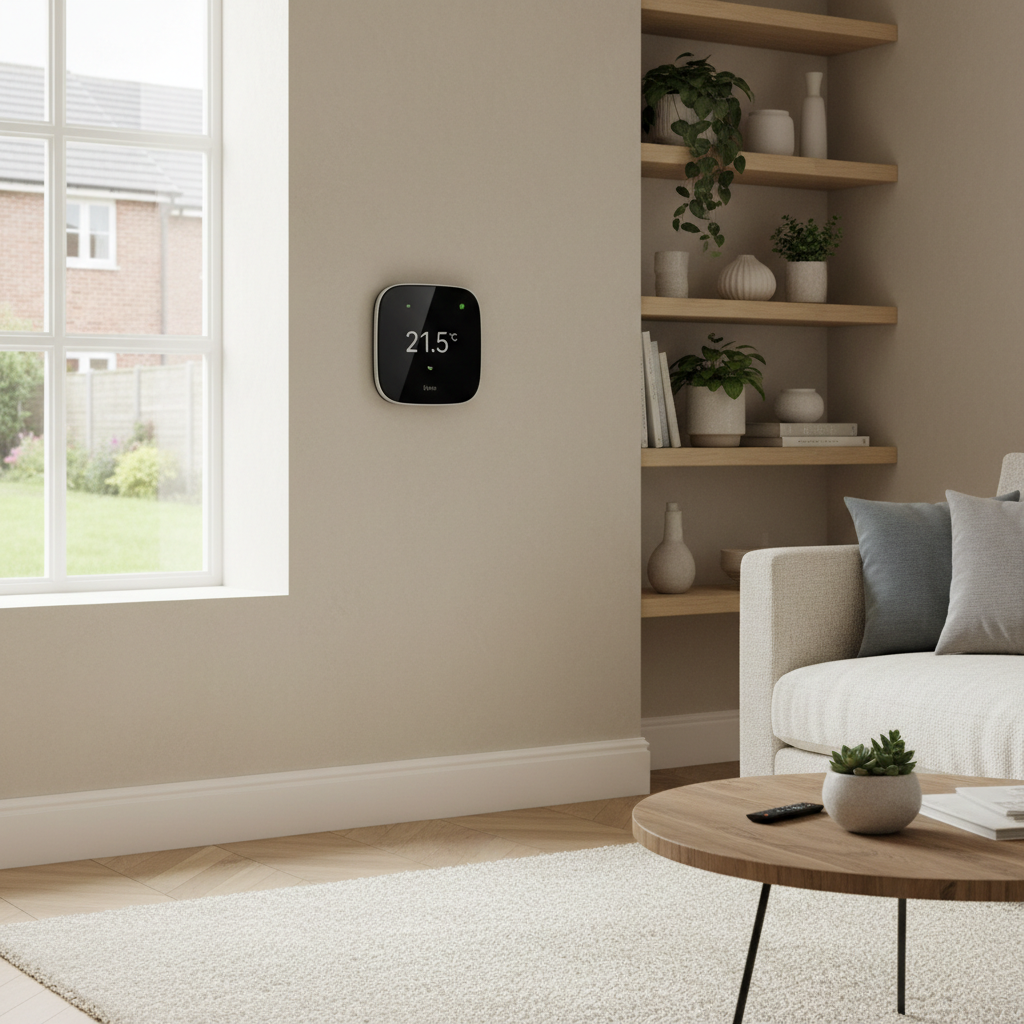
Smart thermostats are the single highest-impact upgrade for a short-let. They let you control the temperature remotely over Wi-Fi, and the best ones for short-lets support temperature limits (so guests can't set the heating to 25°C and leave it), calendar or channel-manager syncing (so the heating drops to a frost-protection setting automatically when the property is unoccupied), and multiple properties under one account.
We use a system that lets guests adjust the temperature within a fixed range - say 18-22°C - while we control the limits remotely. An iCal integration connects it to our channel manager so the heating drops the moment a guest checks out and only warms up ahead of the next arrival. One dashboard manages every property. The typical saving is 15-25% on heating alone, with the biggest gains in winter and in properties that previously heated empty rooms.
Key features to look for:
Temperature limits - set a guest-adjustable range with a hard floor and ceiling.
Calendar/iCal sync - heating follows occupancy automatically; no heating empty properties.
Remote control from one app - essential for portfolios.
Frost protection - a minimum that stops pipes freezing in unoccupied winter weeks.
Zoning - heat only the areas in use, not the whole house.
Switch and bundle your utilities
Tariff choice is the easiest win and the most often ignored. Energy prices remain high and volatile, and staying on a supplier's default or out-of-contract rate is the most expensive way to buy energy. The best deals are usually found by bundling gas, electricity and broadband with a single supplier - in our portfolio, researching bundled tariffs consistently beats standalone energy contracts.
Review your tariff at every renewal, not just when you move in. A 10-15% tariff difference on a £2,500 bill is £250-£375 a year for a few minutes of comparison work.
Use your EPC recommendations
Your Energy Performance Certificate lists recommended improvements with an estimated cost and typical yearly saving. Upgrades that didn't pay back when energy was cheap often have a much better return now - and remember the 'typical yearly savings' figures were calculated at certification and are significantly higher in today's market. You can download your property's EPC via the government's find-a-certificate service.
Prioritise the measures with the shortest payback period. For most short-lets the order is roughly:
| Measure | Typical cost | Estimated annual saving | Payback |
|---|---|---|---|
| Loft insulation top-up | £200-£400 | £150-£300 | 1-2 years |
| Smart thermostat | £150-£300 | £150-£400 | Under 1 year |
| Draught-proofing | £50-£150 | £50-£100 | Under 1 year |
| Hot water cylinder jacket | £15-£30 | £50-£80 | Under 1 year |
| LED lighting throughout | £100-£200 | £60-£120 | 1-2 years |
| Double/triple glazing | High | £100-£200 | 10+ years |
Insulation and quick fabric wins
Heating controls stop you wasting heat; insulation stops it escaping in the first place. The cheapest fabric improvements - loft insulation top-up, draught-stripping doors and windows, and a hot water cylinder jacket - pay back in under a year and make the property feel warmer to guests at a lower thermostat setting. A warmer-feeling property at 20°C beats a draughty one the guest tries to heat to 24°C.
Lighting and appliances
Swapping every bulb for LED is a one-off job with a payback under two years, and LEDs last far longer than halogens - reducing maintenance callouts too. When replacing white goods, choose A-rated appliances; a short-let's washing machine and dryer run daily, so efficiency there compounds across the year. Avoid tumble dryers where a heated airer or drying rack can do the job - dryers are among the most expensive appliances to run.
Managing guest behaviour
Because the guest controls the thermostat during their stay, a little communication goes a long way. A short, friendly note in the guest guide - explaining how the smart thermostat works, asking guests to close windows when the heating is on, and pointing out that the property is well-insulated so a lower setting is comfortable - reliably reduces overuse without making anyone feel lectured.
The smart thermostat's hard limits do the heavy lifting, but the guest guide turns down the friction: guests who understand the system don't fight it.
A simple energy-saving checklist
Fit a smart thermostat with calendar sync and temperature limits
Set a guest-adjustable range (e.g. 18-22°C) with frost protection when empty
Switch to a bundled gas, electricity and broadband tariff and review at renewal
Top up loft insulation and draught-strip doors and windows
Swap all bulbs to LED and choose A-rated appliances
Add a hot water cylinder jacket and insulate exposed pipework
Explain the heating in the guest guide so guests don't fight the controls
Track readings at changeover to spot the properties that need attention
Frequently asked questions
How much can I realistically save on energy in a short-let?
A combination of a smart thermostat, a better tariff and basic insulation typically cuts energy bills 20-30% - around £400-£800 a year for a 2-bed city property - with most measures paying back in under two years.
Can I stop guests leaving the heating on high?
You can't watch them, but you can limit them. A smart thermostat with temperature limits caps how high they can set it, and calendar sync drops the heating to frost protection the moment they check out. A clear note in the guest guide handles the rest.
Is it worth insulating a short-let I don't live in?
Yes - you pay the bills, so the savings flow straight to you. Loft insulation and draught-proofing pay back in under two years and make the property feel warmer, which also improves guest reviews.
Key takeaways
Short-lets cost more to run because guests don't pay the bill and turnover is high.
A smart thermostat with calendar sync and limits is the single biggest win - 15-25% off heating.
Switch and bundle utilities, and review the tariff at every renewal.
Use your EPC's recommendations, prioritising measures that pay back in under two years.
LED lighting and A-rated appliances compound savings with lower maintenance too.
A short, friendly note in the guest guide turns down guest overuse.
Ready to get started?
Get a free personalised income estimate for your property. No commitment, no pressure.