
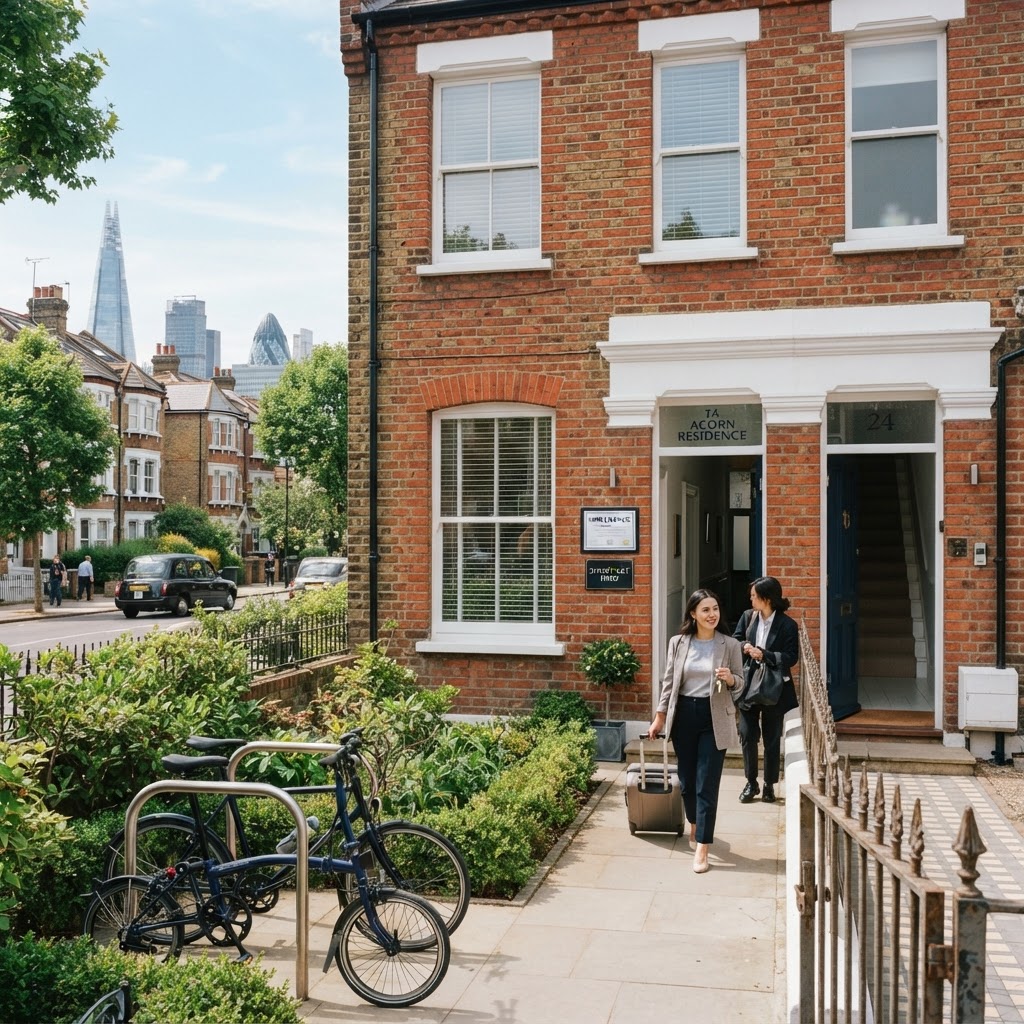
HMO licensing is one of the most misunderstood areas of short-let compliance in the UK. Many operators assume it only applies to traditional student houses or bedsits, and that Airbnb-style properties sit outside its scope entirely. That assumption has cost some landlords dearly.
What is an HMO and can a short-let property be one?
A House in Multiple Occupation is legally defined under the Housing Act 2004 as a property occupied by three or more people who form more than one household and share facilities such as a bathroom or kitchen. The key phrase is "more than one household." A family of five sharing a property is one household. Three friends who are not related or in a relationship are three separate households.
Here is where short lets get complicated. If you list a property that can sleep six people and it is regularly booked by mixed groups, stag parties, or teams of contractors who are not all from the same household, the property may technically qualify as an HMO during those stays. Most councils have not yet pursued this interpretation aggressively, but that does not mean they will not. Several London boroughs and Bristol City Council have raised this directly with operators in recent years, particularly where a property is let to working contractors on a room-by-room basis rather than as a whole unit.
The more common and concrete risk arises when landlords convert a property into individual studio rooms or en-suite bedrooms and list each room separately on Airbnb or Booking.com. This structure is unambiguously an HMO if three or more unconnected guests are staying simultaneously. Operators doing this in cities like Manchester, Birmingham and Leeds should already hold an HMO licence or have taken specific legal advice confirming why one is not required.
When does HMO licensing apply to short lets?
There are three tiers of HMO licensing in England, each with different thresholds. Mandatory licensing applies nationally to properties that are occupied by five or more people from two or more households and are at least three storeys high. Since 2018, that three-storey requirement was removed for mandatory licensing purposes, meaning any property let to five or more people from multiple households now falls into mandatory licensing regardless of how many floors it has. Wales and Scotland have their own frameworks, which differ in some respects, so you should check the rules specific to where your property sits.
For most whole-property short-let operators, mandatory HMO licensing is unlikely to apply unless the property is marketed as sleeping very large groups. A six-bed property sleeping ten guests who all travel together as one party is not an HMO, because it is one household booking the whole property. The risk crystallises when you let rooms individually or when you knowingly accept bookings from unconnected guests who will share the property simultaneously.
Mandatory vs additional vs selective licensing
Beyond mandatory licensing, councils in England can introduce additional licensing schemes that catch smaller HMOs, typically those occupied by three or four people from multiple households. These are entirely discretionary and vary considerably across the country. Nottingham City Council, for example, has run an extensive additional licensing scheme covering most of the city. Bristol, Liverpool and several London boroughs including Newham and Southwark have similar schemes. If your property is in one of these areas and meets the household threshold, you need a licence even if it falls below the mandatory national threshold.
Selective licensing is different again. It applies to all privately rented properties in a designated area, regardless of how many occupants there are or whether it qualifies as an HMO. Selective licensing schemes have been introduced across parts of Manchester, Leeds, Birmingham, Liverpool and elsewhere. Whether a short-let property falls within a selective licensing scheme depends on how your local council has drafted its scheme, and some councils have explicitly included short lets while others have not addressed them clearly. This is an area where professional advice is genuinely worth the cost, because the answer differs street by street in some cities.
What HMO licensing actually requires
Holding an HMO licence is not simply a matter of paying a fee and carrying on. Councils impose conditions that directly affect how a property must be managed and fitted out. Common requirements include minimum room sizes (the national minimum for a single adult sleeping room is 6.51 square metres, introduced in 2018), adequate bathroom and kitchen facilities relative to the number of occupants, working smoke alarms on every floor, heat detectors in kitchens, fire doors in certain configurations, and an annual gas safety certificate.
Some of these overlap with requirements that responsible short-let operators should already be meeting. Others go further. A property with six sleeping rooms let individually may need to install fire-rated doors throughout, upgrade its kitchen to accommodate multiple simultaneous users, and carry out a full fire risk assessment by a competent person. The cost of bringing a property up to HMO standard before applying for a licence can easily run to £5,000 to £15,000 depending on its current condition and configuration. Licence fees themselves vary but typically range from £500 to £1,500 for a five-year licence, with some London boroughs charging over £2,000.
The licence is also personal. It is issued to a named licence holder who must be a "fit and proper person" in the council's assessment. If you use a management company to operate the property, the management arrangements need to reflect who is actually responsible for day-to-day compliance. Some councils require the managing agent to be named on the licence or to hold their own licence. If you are working with a short-let management company in a city like Birmingham or Leeds, it is worth confirming precisely how they handle this.
Penalties for getting it wrong
Operating an unlicensed HMO is a criminal offence under the Housing Act 2004. The maximum fine on summary conviction is unlimited, though in practice fines of £10,000 to £30,000 are not unusual for serious or repeat cases. Councils can also issue civil penalty notices of up to £30,000 per offence as an alternative to prosecution, and they can do so without the matter going to court, which makes enforcement faster and more straightforward for the local authority.
There is a further financial consequence that catches landlords by surprise. Tenants or guests in an unlicensed HMO can apply to a tribunal for a Rent Repayment Order, requiring the landlord to repay up to 12 months of rent received while the property was unlicensed. This provision was extended in 2017 to cover a wider range of housing offences. Even if enforcement action by the council seems unlikely, exposure to a rent repayment claim from a former guest is a real risk that should not be dismissed.
How to check your licensing position before you let
The starting point is your local council's website. Most councils publish maps or postcode checkers showing which licensing schemes apply in which areas. If your property is in a designated selective or additional licensing zone, the council website will usually confirm what is required and how to apply. For HMO status specifically, the question of whether your property qualifies depends on how it is actually used, which means you need to be honest about your letting model.
If you let the whole property to a single booking party at a time, you are almost certainly not operating an HMO. If you let rooms individually or allow unconnected guests to share the property simultaneously, take specific advice from a solicitor with housing law experience before you start. The GOV.UK guidance on HMOs provides the statutory framework, but local licensing conditions and enforcement priorities vary enough that national guidance only takes you so far.
Check your council's website for selective and additional licensing designations using your postcode
Confirm whether your letting model (whole property vs individual rooms) affects your HMO status
If in doubt, instruct a solicitor with housing law experience before listing
Short-let compliance does not stop at HMO licensing. Planning restrictions, fire safety obligations and insurance all need to sit alongside your licensing position. Operators managing properties in cities with complex licensing landscapes, such as Manchester or Liverpool, benefit from working with a management company that understands local rules and can flag issues before they become expensive. This article covers the general legal framework but does not constitute legal advice. If you are uncertain about your specific position, seek advice from a qualified solicitor or your local council's private rented sector team.
If you are weighing up how to structure a short-let property and want to understand what income is realistic before you commit to a compliance spend, Truestays can provide a free income estimate based on your property and location. Visit our resources page or get in touch directly to find out what your property could achieve.
Ready to get started?
Get a free personalised income estimate for your property. No commitment, no pressure.