
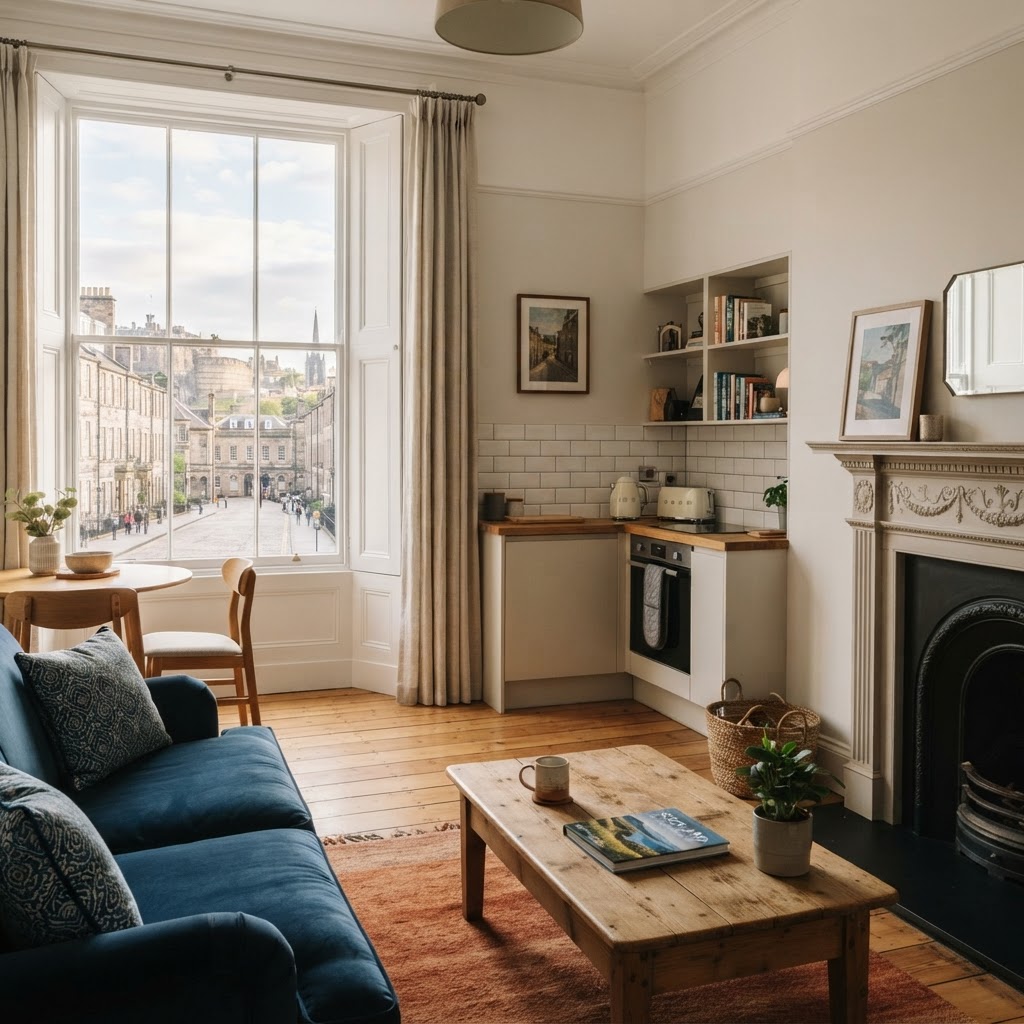
Most short-let investors fixate on location when deciding where to buy, but property type has an equally significant effect on revenue, occupancy and net profit. A poorly chosen property type in a strong market will underperform a well-chosen one in a middling market. Getting this decision right before you commit to a purchase is one of the most reliable ways to protect your returns.
Why property type matters more than location alone
Location sets the ceiling on what a property can earn. Property type determines how much of that ceiling you actually reach. A city with strong short-let demand, like Manchester, Edinburgh or Bristol, will still produce wildly different results depending on whether you are running a studio flat, a four-bed house or a serviced apartment in a branded block. The variables that change between property types include average nightly rate (ADR), occupancy rate, cleaning cost per turn, guest profile, review patterns and operating complexity. Each of those factors compounds over a full year of trading.
From managing properties across multiple UK cities, one pattern that consistently holds is that the properties generating the best net returns are rarely the ones with the highest gross revenue. A six-bed party house in a stag-do hotspot can gross £80,000 a year and net less than a well-positioned two-bed apartment grossing £45,000, once you account for damage, cleaning time, linen volume and guest management. Gross yield tells you the story you want to hear. Net yield tells you what actually happened.
Studios and one-beds: high occupancy, tight margins
Studios and one-bedroom flats are the entry point for most short-let investors, and for good reason. They are cheaper to buy, cheaper to furnish, faster to clean and attract a broad range of guests: solo travellers, couples on city breaks, contractors on weekly stays. In cities like Leeds, Sheffield and Nottingham, a well-positioned one-bed can hit 75 to 85 percent occupancy with relatively little effort.
The challenge is that ADR is naturally capped. A one-bed in a mid-tier UK city will typically average £80 to £110 per night. After platform fees, cleaning, utilities and management, the margin per booking is thin. Studios in particular can struggle to justify their running costs if the property is not genuinely well-located. Within walking distance of a train station or city centre venue, they work. On the edge of a residential suburb with no particular draw, they grind.
Leasehold restrictions are also a significant practical concern for flat owners. A large proportion of city-centre apartment blocks in the UK have lease clauses that either prohibit short letting entirely or require freeholder consent. This is not a hypothetical risk. It has resulted in landlords being forced out of Airbnb mid-operation. Always check the lease before you buy, and seek legal advice if the wording is ambiguous.
Two and three-bed apartments: the short-let sweet spot
If you ask most experienced UK short-let operators which property type they would buy again, the two-bed apartment comes up repeatedly. It hits a pricing tier that attracts both leisure guests (couples with a friend group, families with young children) and corporate guests (two colleagues on a project, a relocating professional who needs a spare room). That breadth of demand is valuable because it reduces reliance on any single booking type.
ADR for a two-bed in a strong city-centre location typically ranges from £110 to £160 per night, with well-presented properties in cities like Birmingham or Manchester regularly clearing £140. Occupancy tends to sit between 70 and 80 percent for a competently managed listing. The cleaning cost per turn is higher than a studio but not dramatically so, and the guest profile is generally more stable. Families and couples tend to generate fewer complaints and leave properties in better condition than large groups.
Three-bed properties follow a similar logic but with a higher ADR ceiling, often £150 to £220 per night in competitive markets, and they open up the weekend group market without crossing into the high-damage territory that larger houses can bring. The key constraint with three-beds is that cleaning time increases materially. A thorough clean of a three-bed apartment takes three to four hours minimum. If your cleaning cost is fixed at a flat rate, that may be fine. If you are self-managing and doing it yourself, the time cost compounds fast.
Houses and whole-home properties: bigger revenue, bigger risk
Detached and semi-detached houses, particularly those with four or more bedrooms, can generate impressive headline revenue numbers. A four-bed house in a popular market like the Lake District, the Cotswolds or coastal Cornwall can clear £60,000 to £100,000 gross per year during peak periods. That is real money, and it is part of why rural and semi-rural whole-home properties attract significant investor interest.
The operational reality is more demanding. Larger groups mean more wear across every surface, appliance and piece of furniture in the property. Linen volumes are substantial. If you have a hot tub or garden, maintenance costs add up quickly. Guest disputes are more common because expectations are higher and the guests are often celebrating something, which introduces its own dynamic. Insurance for larger short-let properties is more expensive, and in some planning authority areas, using a house as a short-let requires permitted development consent or a change of use application. If you are considering this route, take professional planning and legal advice before proceeding.
The properties that perform best in this category tend to be those with a genuinely unique offering: a converted barn in the Yorkshire Dales, a beachfront property in Northumberland, a Victorian townhouse with a games room in a spa town. Generic four-bed houses in suburban locations rarely justify the operational complexity relative to a two-bed apartment in the same city.
Unusual and niche properties: strong ADR, harder to scale
Shepherd's huts, converted railway carriages, treehouses, lighthouse cottages and boutique glamping setups consistently generate the highest ADR relative to their size of any property type in the UK short-let market. A well-presented shepherd's hut sleeping two in a rural Yorkshire location can charge £180 to £250 per night and achieve 65 to 70 percent annual occupancy. The revenue per square metre is extraordinary.
The practical constraints are significant, though. These properties are intensely guest-experience-led. A mediocre stay at a treehouse will generate worse reviews than a mediocre stay at a city flat, because guests arrive with higher expectations and a stronger emotional investment. Maintenance is non-standard, finding specialist contractors is harder, and if something breaks, the property may need to come off platform for longer than a conventional property would. Planning permission for new structures of this type is not guaranteed, and permitted development rules differ across England, Scotland and Wales.
Niche properties also do not scale in the way that apartment portfolios do. You can build a portfolio of similar two-bed flats and apply largely the same systems, suppliers and pricing logic to all of them. Niche properties each require their own operational approach. That is not a reason to avoid them, but it is a reason to go in with realistic expectations about how much time they require.
How to match property type to your investment goals
The right property type depends on what you are trying to achieve. If your priority is a scalable portfolio with manageable operations and predictable net returns, two-bed apartments in strong UK cities are the most reliable starting point. Our Leeds management page and Birmingham management page give a sense of the kind of properties that trade well in those markets.
If you are willing to accept more operational complexity in exchange for higher ADR and a more distinctive guest experience, rural whole-home and niche properties can deliver strong results, particularly if you have a clear marketing angle and the capacity to maintain them properly. If you want simplicity and low entry cost, a one-bed in a well-connected city centre is a reasonable starting point, provided the lease allows short letting and the numbers stack up once you account for all operating costs.
Two-bed city-centre apartments: best balance of occupancy, ADR and operating simplicity
Rural whole-home properties: highest revenue potential but most operationally demanding
Studios and one-beds: reliable occupancy, limited ADR ceiling, check lease restrictions carefully
Niche properties: exceptional ADR per square metre, difficult to scale, planning risk applies
One thing that consistently surprises new investors is how much property presentation affects returns within the same property type. Two near-identical two-bed flats in the same postcode, managed with the same pricing strategy, can produce materially different results based on photography, interior quality and listing copy. We cover the interiors side of this in more detail on the Truestays interiors page.
Tax treatment also varies depending on how and where you operate. Furnished Holiday Lettings rules, council tax versus business rates liability, and income tax or corporation tax treatment all depend on your specific circumstances. Seek advice from a qualified accountant with short-let experience before making a purchase decision based on projected net returns.
If you want to understand what a specific property type in a specific location is likely to earn under professional management, Truestays offers a free income estimate based on real market data. You can request one at truestays.com/pricing and get a realistic view of what your investment could deliver before you commit.
Ready to get started?
Get a free personalised income estimate for your property. No commitment, no pressure.